
DACF Home → Bureaus & Programs →Per- and Polyfluoroalkyl Substances (PFAS) → PFAS Response
Responding to PFAS in Agriculture
On this Page:
Background
Maine is a leader in taking proactive steps to identify and address the impacts of PFAS in the environment, particularly in agriculture. PFAS collectively refer to thousands of varieties of man-made chemicals known as per- and polyfluoroalkyl substances, used to repel oil, grease, water, and heat. PFAS exposure has been linked to various health concerns. Laws in Maine and other states are beginning to limit their use in certain products. However, they are difficult to destroy, earning them the label of “forever chemicals”. Despite this, meaningful action can be taken to limit their impact on agricultural products, ultimately protecting consumer health and allowing most farms to continue farming safely.
PFAS may enter soil, water, and air in a variety of ways. One way that PFAS may enter soil is through the application of residuals such as sludge (also called biosolids) from wastewater treatment plants and septage. Amounts and types of PFAS will vary depending on both where the residuals came from and how frequently they were applied. PFAS in residuals can enter soil and water, be taken up by crops or animals exposed to contaminated fields or water sources, and ultimately be consumed by humans.
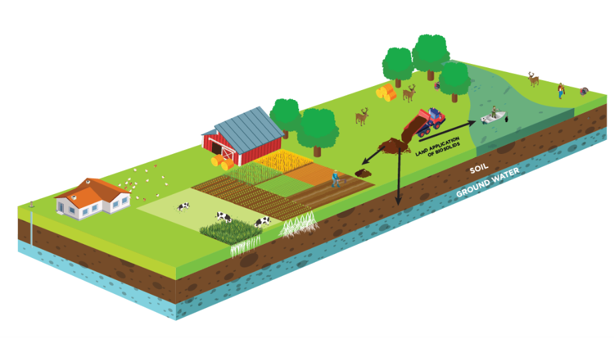
The application of residuals to farm fields is a common practice in U.S. agriculture, as they contain nutrients and other organic matter that can enhance soil health and agricultural production. Maine banned the land application of residuals in 2022. Some states are beginning to implement testing requirements or other limits.
The Maine Department of Environmental Protection is required, through Public Law 2021, Chapter 478, An Act To Investigate PFAS Substance Contamination of Land and Groundwater (sometimes called “LD 1600”), to evaluate soil and groundwater for PFAS at locations licensed to land apply sludge or septage prior to 2019. This systematic, risk-based process has been a primary driver of DACF’s work to date, providing timely and relevant expertise to commercial agricultural operations.
Timeline of Maine's Efforts
Read how DACF's PFAS response efforts developed and expanded over time (PDF)
- In January 2026, the PFAS Fund published revised rules (01-001 C.M.R. ch. 400-406) to refine the administration of its programs and align appeal procedures with DACF rules.
- In April 2026, the PFAS Fund awarded $3 million in new research grants to nine projects that will focus on improving soil tests; understanding plant, animal, and pollinator uptake of PFAS; impact of PFAS on animal and pollinator health; advancing predictive modeling of soil to livestock pathways; whether plant uptake and PFAS leaching can be reduced through biochar; and possibilities for alternate crop production.
- As of June 30, 2026, the PFAS Fund provided over $2.5 million to 30 farms, purchased two properties, committed $6 million for research, and collaborated with Maine CDC and a private laboratory to establish a program to support PFAS blood serum testing and the development of guidance and clinical protocols for physicians.
- From January 1 to June 30, 2026, DACF has identified an additional 16 farms with at least one test result exceeding the most conservative DACF soil screening level (6.4 ppb PFOS) and/or the Maine Interim Drinking Water Standard (20 ppt Sum6). This brought the total number of impacted farms engaged with DACF to 130. The impact of an elevated water or soil test on a farm's operations will be highly dependent on the specific product, management practices, and size of the operation.
Close -
What We Do
What is the PFAS Response Program?
The 2021 Biennial budget provided funding and staff to the Bureau of Agriculture to "strategically and effectively respond to PFAS concerns and issues as they arise." With expertise from Agricultural PFAS Specialists, who conduct field work and serve as the primary point of contact for farmers, veterinarians, and others, the PFAS Response Program:
- Conducts comprehensive testing in soils, water, and products to determine whether PFAS is present and at what levels;
- Interprets results in the context of that farm's operations;
- Prevents food deemed unsafe for consumption from entering the food supply;
- When action is necessary to reduce contamination in farm products to acceptable levels –
- Develops and provides clear recommendations for next steps the farm can take to achieve safe products, and
- Provides financial assistance to implement any necessary changes
The work of the PFAS Response Program was formally established in statute in the fall of 2025 and is currently undergoing rule-making.
What is the PFAS Fund?
In 2022, Governor Mills and the Maine Legislature established the $60 million PFAS Fund to provide robust, multi-faceted support to address PFAS in agricultural communities.
The PFAS Fund:
- Provides additional financial and professional support to PFAS-impacted commercial farmers;
- Purchases PFAS-contaminated real estate from farmers who want to sell, and manages the properties for public benefit;
- Funds research to help farmers make informed decisions about how to adjust their operations; and
- Supports access to blood testing and other health-related initiatives.
The work of the PFAS Fund is governed by a statute and rules, and guided by an implementation plan (PDF).
Additionally, the PFAS Fund Advisory Committee makes recommendations to DACF regarding administration of the PFAS Fund.
Current PFAS Fund Advisory Committee Members +
- Senator Stacy Brenner, co-chair
- Senator Rick Bennett
- Representative Daniel Ankeles, co-chair
- Representative Randy Hall
- Commissioner Amanda Beal, Department of Agriculture, Conservation and Forestry
- Melanie Loyzim, Department of Environmental Protection
- Deputy Director, Nancy Beardsley, Department of Health and Human Services, Center for Disease Control and Prevention
- Associate Dean Jason Bolton, University of Maine
- Deputy State Executive Director Lucia Brown, USDA Farm Service Agency
- Jim Buckle, Buckle Farm
- Steven Crane, Crane Bros. Farm
- Jenni Tilton Flood, Flood Bros. Farm
- Katia Holmes, Misty Brook Farm
- Adrienne Lee, New Beat Farm
- Executive Director Rebecca Boulos, Maine Public Health Association
Close -
Public Meetings & Public Hearings
- No meetings currently scheduled.
Meeting Archive +
| Date | Title | Documents |
|---|---|---|
| October 29, 2026 | PFAS Fund Advisory Committee Meeting | |
| August 12, 2026 | PFAS Fund Advisory Committee Meeting | |
| February 19, 2026 | Notice of Agency Rulemaking for PFAS Fund Rule Chapters 407 & 408 | |
| December 15, 2025 | PFAS Fund Advisory Committee Public Meeting | |
| October 28, 2025 | Draft Rulemaking: PFAS Fund's Rules: Public Hearing | |
| October 7, 2025 | PFAS Fund Advisory Committee Meeting | |
| March 5, 2025 | PFAS Fund Advisory Committee Public Meeting | |
| January 16, 2025 | PFAS Fund Advisory Committee Public Meeting | |
| October 24, 2024 | PFAS Fund Advisory Committee Public Meeting | |
| September 19, 2024 | PFAS Fund Advisory Committee Public Meeting | |
| June 14, 2024 | PFAS Fund Advisory Committee Public Meeting | |
| January 16, 2024 | PFAS Fund Plan Draft Rule Making Public Hearing - Public Comment | |
| January 11, 2024 | PFAS Fund Advisory Committee Public Hearing | |
| December 4, 2023 | PFAS Fund Advisory Committee Meeting | |
| November 29, 2023 | Public Comment: PFAS Fund Plan Draft Rule Making | |
| July 10, 2023 | PFAS Fund Advisory Committee Meeting | |
| June 12, 2023 | PFAS Fund Draft Implementation Plan Public Hearing | |
| May 10, 2023 | PFAS Fund Advisory Committee Meeting | |
| May 1, 2023 | PFAS Fund Advisory Committee Meeting | |
| February 13, 2023 | PFAS Fund Advisory Committee Meeting | |
| January 11, 2023 | PFAS Fund Advisory Committee Public Hearing | |
| December 12, 2022 | PFAS Fund Advisory Committee Meeting | |
| November 14, 2022 | PFAS Fund Advisory Committee Meeting |
|
Close -
Reports +
- Annual Report from the PFAS Fund to Legislature, March 2026 (PDF)
- Annual Report from the PFAS Fund to Legislature, March 2025 (PDF)
- Annual Report from the PFAS Fund to Legislature, March 2024 (PDF)
- Annual Report from the DACF to the Legislature, March 2023 (PDF)
- Annual Report from the PFAS Fund Advisory Committee to the Legislature, March 2023 (PDF)
Close -