
DACF Home → Bureaus & Programs → Per- and Polyfluoroalkyl Substances (PFAS)
Per- and Polyfluoroalkyl Substances (PFAS)
The Department of Agriculture, Conservation and Forestry (DACF) is dedicated to assisting commercial farms impacted by PFAS contamination. DACF has created pioneering technical and financial assistance programs to help affected farmers navigate the uncertainties of PFAS contamination. DACF staff work directly with impacted farms to identify the sources of contamination and recommend detailed management strategies to keep agricultural land in safe production.
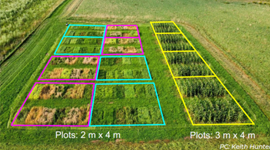
DACF has also launched a program to fund rigorous research, with the goal of helping producers make informed decisions about managing PFAS on their farms. Additionally, DACF purchases and stewards PFAS-impacted agricultural land and supports access to blood testing and other health initiatives. Together, these programs safeguard human health and ensure that farms can thrive.
It is important to note that the majority of farms in Maine will not be directly impacted by PFAS, although we recognize that the agricultural community is very interconnected and that indirect effects can be challenging for all farms to navigate. The actual discovery of PFAS on a farm is undeniably challenging. However, DACF has demonstrated that most impacted farms can make adjustments that allow them to remain in business and produce safe food. Importantly, Maine has learned that PFAS does not always mean the end of a farm.
Please explore these web pages explaining how DACF is working to protect both agriculture and human health in Maine's vibrant farming community. Together with our producers and many critical partners, we are pursuing resilience and innovation in the face of PFAS.
Amanda E. Beal
Commissioner
Two Units, One Goal
Two units within DACF work together to support commercial farms facing PFAS contamination challenges: the PFAS Response Program and the PFAS Fund. Although distinct teams, they work together to create comprehensive support. With support from these two programs, most farms can adapt and continue producing safe products.
The PFAS Response Program works in partnership with producers to identify PFAS contamination,develop strategies to reduce or eliminate PFAS in food products, and provide individualized technical and financial assistance to achieve farm sustainability.
The PFAS Fund provides additional financial assistance to impacted commercial farms, purchases contaminated farmland properties, funds agricultural PFAS research, and supports health-related activities.
Generally, a farm’s first step is to work with the PFAS Response Program to test to find out whether PFAS is present. If it is, an Agricultural PFAS Specialist (APS) will work with the farmer to understand their operation and, if necessary,develop a plan to minimize PFAS impacts. From there, farms can access grants and technical assistance from both the PFAS Response Program and the PFAS Fund to meet short-term needs and long-term solutions.
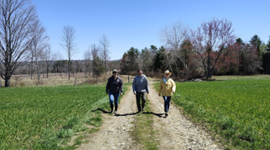 Maine's Response
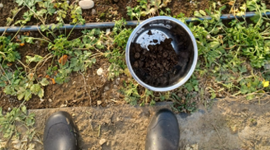 Testing & Recommendations
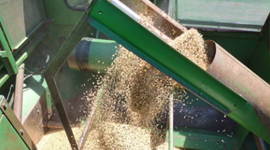 Grants & Other Assistance
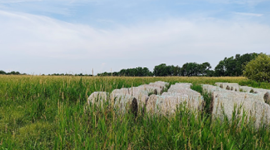 Land Purchases & Stewardship
 Research
 Health
 Additional Resources